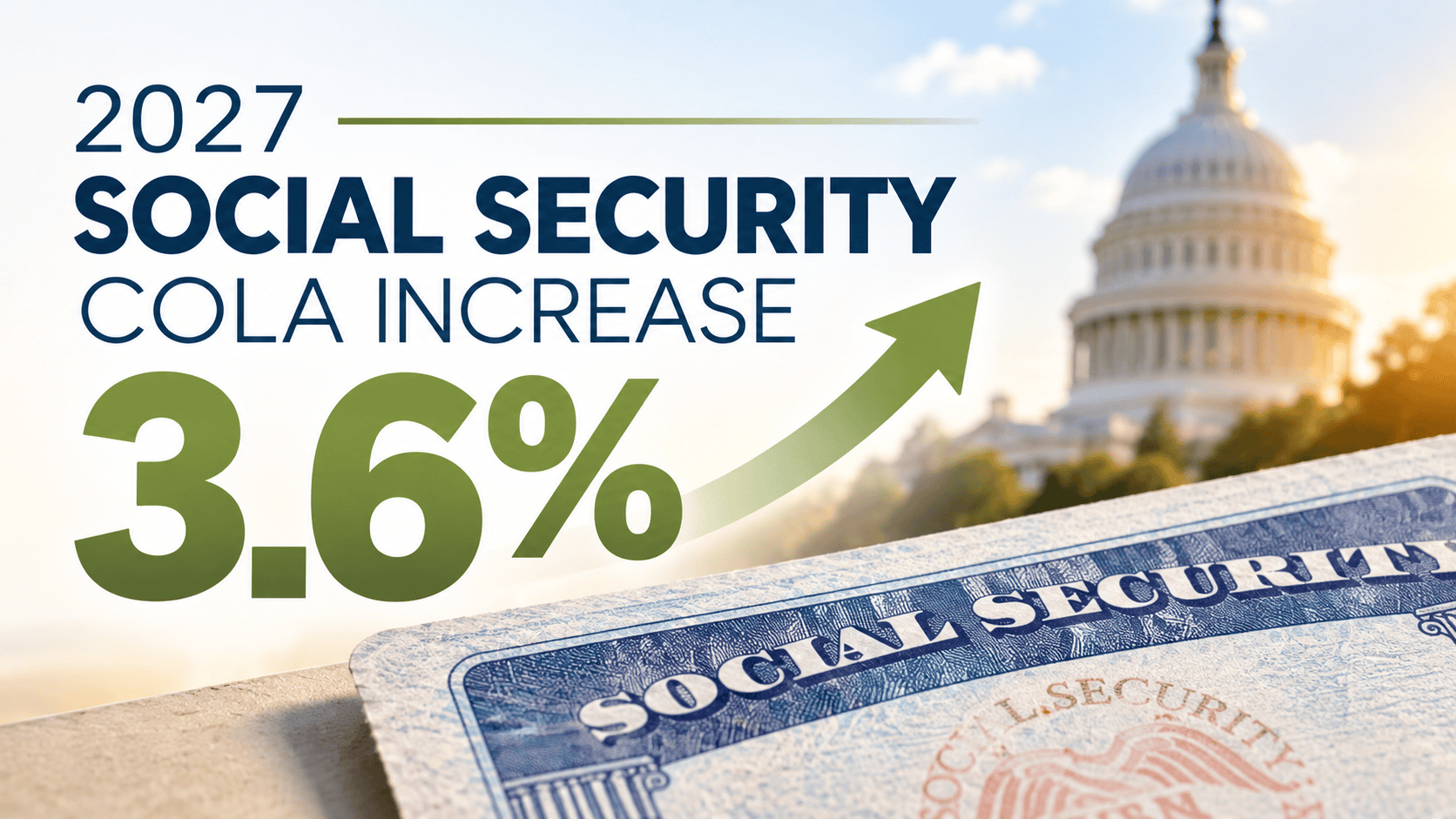
For millions of Americans, Social Security is an important part of their retirement income. And beginning in January 2027, those monthly benefits will be getting a boost.
The Social Security Administration (SSA) recently announced a 3.6% cost-of-living adjustment (COLA) for 2027, the largest increase since 2023.
While the additional income is welcome news, understanding how the adjustment affects your benefits, Medicare costs, and overall retirement budget can help you plan for the year ahead.
How Much More Will You Receive in 2027?
The 3.6% increase will raise the average monthly Social Security retirement benefit by approximately $75, according to the SSA. Your individual increase will depend on your current benefit amount.
For example, someone receiving $2,000 per month in Social Security benefits would see an additional $72 each month, bringing their monthly benefit to $2,072. That translates to $864 in additional annual income, before any applicable deductions.
Social Security’s annual COLA is intended to help recipients maintain their purchasing power as prices rise. The adjustment is based on changes in the Consumer Price Index for Urban Wage Earners and Clerical Workers (CPI-W), which measures inflation.
Although the increase helps offset rising costs, it may not fully reflect changes in your personal expenses, especially if healthcare or other essential costs rise faster than the overall inflation rate.
Why Your Medicare Premiums Matter
Before making plans for that additional income, remember that your actual monthly payment may be affected by Medicare premiums.
If your Medicare Part B premiums are deducted directly from your Social Security benefits, an increase in those premiums could reduce the amount of your COLA that reaches your bank account.
At the time of publication, the 2027 Medicare premium amounts have not been announced yet. Once those figures become available, you’ll have a better understanding of your net monthly Social Security benefit.
This is one reason it’s important to consider Social Security and healthcare expenses together when reviewing your retirement income.
When Will You Find Out Your New Benefit Amount?
You won’t need to apply for the increase or make any changes to receive it. The COLA will be applied automatically to eligible benefits beginning in January 2027.
The SSA will provide personalized notices showing your updated benefit amount and any applicable deductions.
If you have a my Social Security account, you can access your notice online beginning in late November. Paper notices will be mailed in December.
What Does the COLA Mean for Your Retirement Plan?
An increase in Social Security benefits is a good opportunity to review your retirement income strategy, even if the adjustment seems relatively small.
If you’re already retired, consider how the additional income fits into your household budget. Will it help offset higher living expenses? Could it reduce the amount you need to withdraw from your retirement savings? Are your anticipated healthcare costs changing?
For those approaching retirement, the COLA announcement is also a reminder to evaluate when to begin collecting Social Security benefits.
Your claiming age can significantly influence the monthly benefit you receive throughout retirement. Rather than making that decision based on the latest COLA, it’s important to consider your anticipated retirement date, other income sources, financial needs, and long-term goals.
The Bottom Line
The 3.6% Social Security increase will provide additional income for millions of Americans in 2027. While the adjustment is automatic, its impact on your retirement finances deserves some attention.
At Access Wealth, we believe Social Security decisions are most effective when they’re considered as part of a comprehensive financial plan. Whether you’re already receiving benefits or preparing to retire, understanding how Social Security fits alongside your savings, investments, and anticipated expenses can help you make more informed decisions about your financial future.
For additional information about the 2027 adjustment, visit the Social Security Administration’s COLA information page.