For many grandparents, few things are more rewarding than helping a grandchild get a good start in life. That might mean contributing toward a first car, helping with a down payment on a home, or setting aside money for college.
But when it comes to college savings, generosity hasn’t always been straightforward. In the past, grandparents who used certain savings accounts to help pay tuition could unintentionally reduce their grandchild’s eligibility for financial aid.
Fortunately, changes to the Free Application for Federal Student Aid (FAFSA) have removed an important obstacle, making it easier for grandparents to contribute to a grandchild’s education.
Why Grandparents Once Had to Be Careful
A 529 college savings plan has long been a popular way for families to save for education. These tax-advantaged accounts allow money to grow tax-deferred, and withdrawals are generally tax-free when used for qualified education expenses.
However, the way a 529 plan affected financial aid depended partly on who owned the account.
Under the previous FAFSA rules, a 529 plan owned by a grandparent wasn’t reported as an asset on the student’s application. That sounded like good news. The complication came when the grandparent actually used the money.
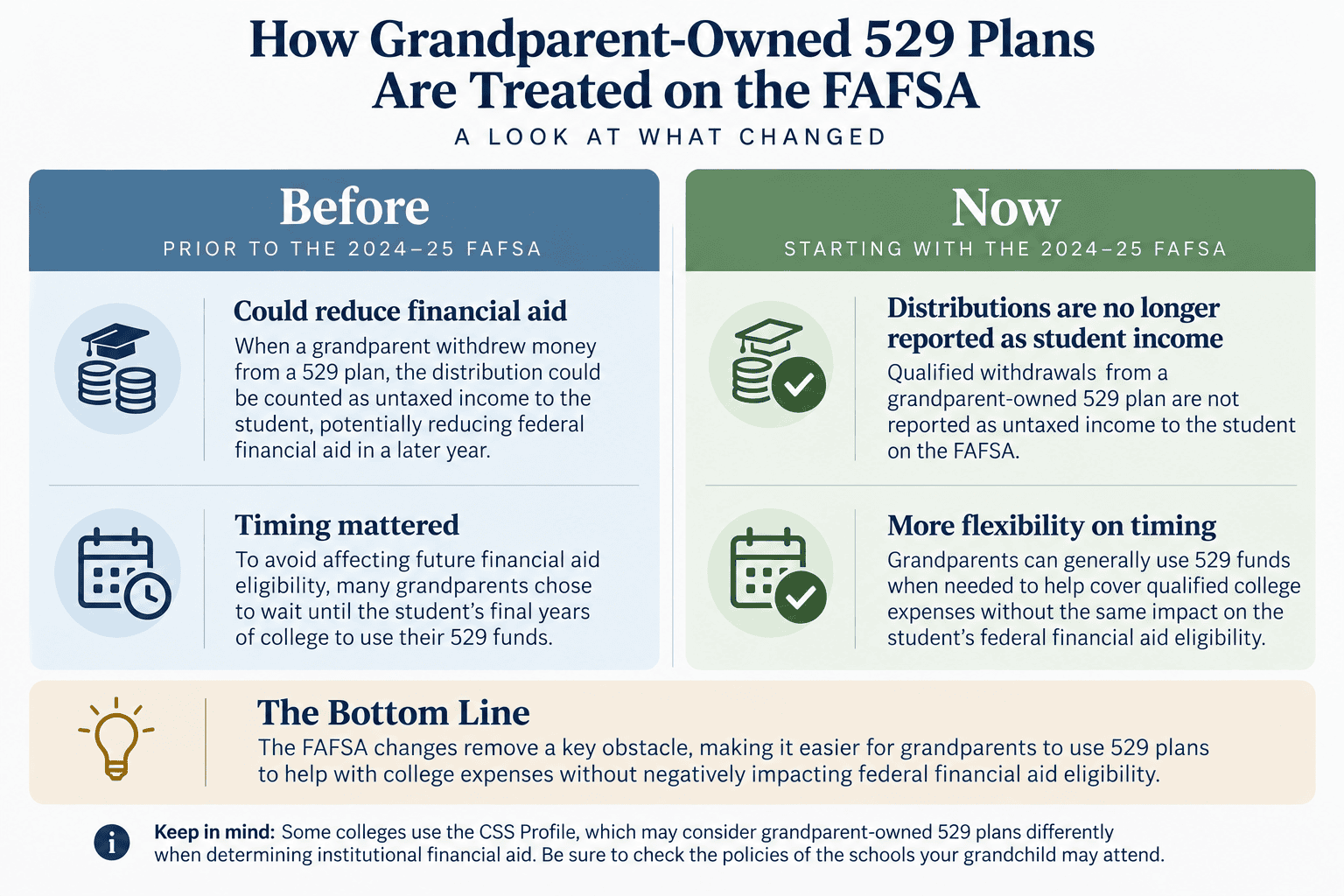
Withdrawals from a grandparent-owned 529 plan could be counted as untaxed income to the student, potentially reducing the financial aid available in a subsequent year.
As a result, some grandparents delayed using their savings until their grandchild’s final years of college to avoid affecting future aid eligibility.
The good news? That workaround is generally no longer necessary.
What Changed with FAFSA?
Beginning with the 2024–25 academic year, changes to the FAFSA eliminated a long-standing concern for grandparents who wanted to use their 529 savings to help pay for college.
Under the current federal rules, distributions from grandparent-owned 529 plans are no longer reported as untaxed student income on the FAFSA. This means grandparents generally have more freedom to use their savings when their grandchildren need them, without worrying about the same potential reduction in federal financial aid.
Here’s a look at how the rules have changed.
Does That Mean a Grandparent-Owned 529 Is Always the Best Choice?
Not necessarily.
Although the FAFSA changes make grandparent-owned accounts more attractive, there are still several factors to consider.
Who controls the money? A grandparent who owns a 529 plan generally retains control over the account, including investment decisions, distributions, and the ability to change beneficiaries within applicable rules.
What if the grandchild attends a private college? Some colleges use an additional financial aid application called the CSS Profile to determine eligibility for institutional aid. These schools may consider grandparent-owned 529 plans differently from the FAFSA. It’s worth checking the policies of schools the student may attend.
Are there tax advantages? Depending on the state, contributions to a 529 plan may qualify for state income tax benefits. There may also be gift and estate planning considerations, particularly for grandparents who want to make substantial contributions.
What happens if the money isn’t needed for college? Depending on the circumstances, unused 529 funds may be used for other eligible education expenses, transferred to another qualifying family member, or potentially rolled into the beneficiary’s Roth IRA, subject to specific requirements and limitations.
The best arrangement depends on the family’s circumstances, not simply the financial aid rules.
A College Gift Should Fit Your Financial Plan, Too
Helping a grandchild with college can be a wonderful gift, but it shouldn’t come at the expense of your own financial security.
Before making a substantial contribution, consider how it fits into your retirement income needs, investment strategy, estate plan, and other financial commitments.
It’s also worth having a conversation with the parents. Are they already contributing to a college savings account? How much do they anticipate needing? Would it be more helpful to contribute now, establish a separate account, or assist with expenses once the grandchild is enrolled?
Coordinating these decisions can help everyone work toward the same goal without duplicating efforts or creating unnecessary complications. Families may also want to explore other savings options, including newer Trump Accounts, which are designed to help children build savings for the future.
Helping the Next Generation Starts with a Plan
For grandparents who want to make education part of their financial legacy, the FAFSA changes have created more opportunities to help.
Whether you’re considering opening a 529 plan, already have one in place, or want to explore other ways to support your grandchildren, it’s worth reviewing your options as part of your broader financial plan.
At Access Wealth, we help families consider how education funding, retirement planning, and wealth transfer decisions work together. If helping your grandchildren pay for college is one of your goals, we’re here to help you explore an approach that makes sense for your family.